Ouzoud Waterfalls History & the Berber Villages Around It
Quick answer
**Ouzoud waterfalls history** traces to the Berber word for grinding, a nod to old olive presses along the gorge. Berber villages and argan cooperatives are still active there today.
Ouzoud waterfalls history starts with the name itself. Ouzoud comes from the Berber word for the act of grinding, a reference to the olive presses that have operated along this gorge for generations. I think this detail changes how you experience the site, since it turns Ouzoud from just a scenic photo stop into a place with a working history that predates tourism by a long way. Here is what I would want to know before walking the trail down.
What Does the Name Ouzoud Actually Mean?
Ouzoud translates roughly to the act of grinding in the local Berber, or Amazigh, language, a direct reference to the olive presses that once lined the gorge and used the river’s flow as part of their operation. I would treat this as more than trivia, since it tells you the falls were a working part of local life long before anyone came here for a photo.
Who Are the Berber People Living Around the Falls?
The communities around Ouzoud are Amazigh, commonly known as Berber, an indigenous population of North Africa with a distinct language and culture that predates the Arab conquest of the region. I would not use the words Berber and Arab interchangeably when talking about Morocco, since they describe genuinely different cultural and linguistic groups, and the villages around Ouzoud specifically identify with Amazigh heritage.
What Is the Nearby Village of Tanaghmeilt Like?
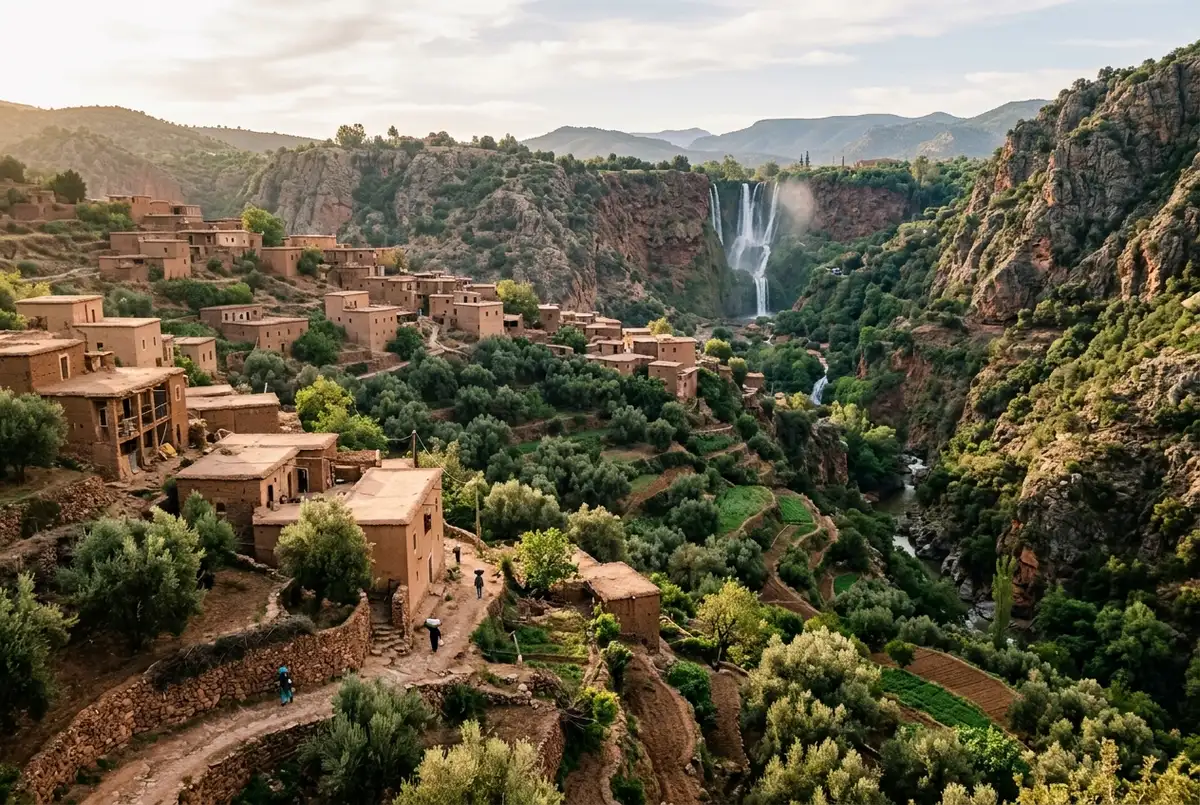
Tanaghmeilt is the village closest to the falls, a small Berber community built around traditional earthen architecture, olive groves and the tourism trade that has grown around Ouzoud in recent decades. I would recommend paying attention to the village itself on your way down to the falls, not just rushing past it, since it gives the visit a sense of place that the waterfall alone does not.
How Old Are the Olive Presses Along the Gorge?
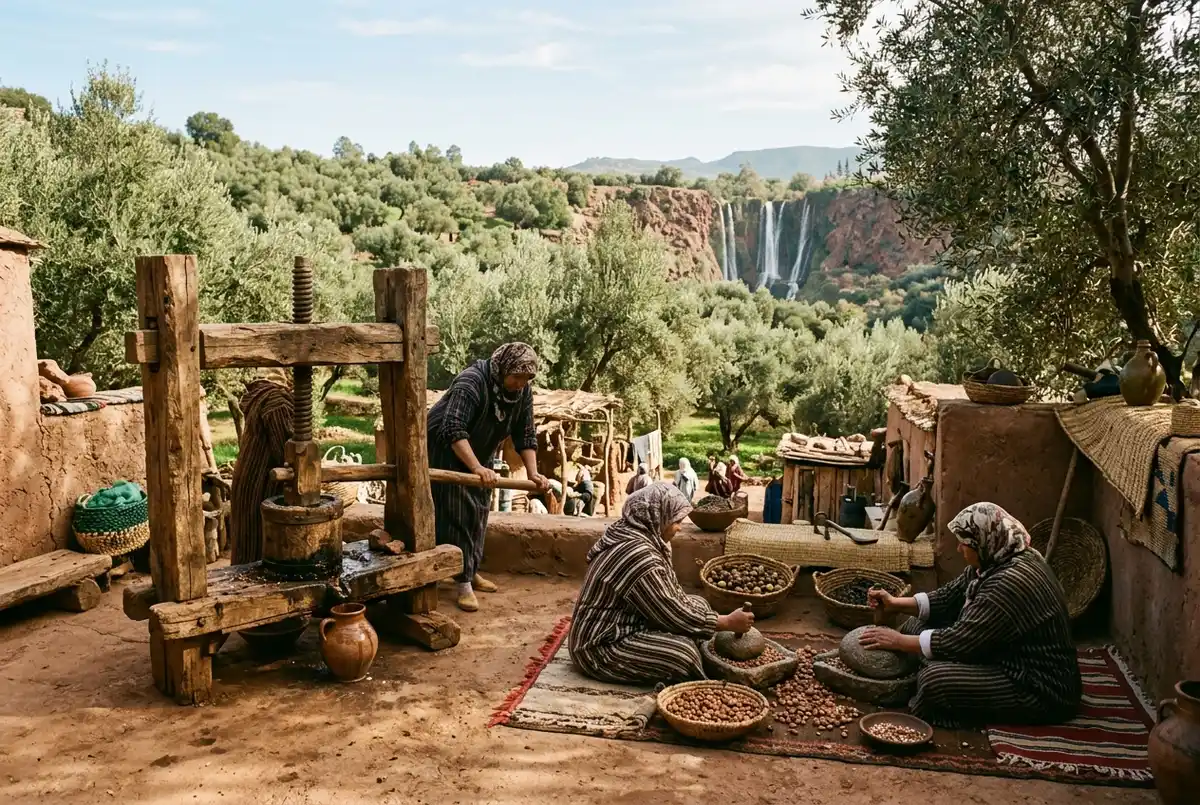
Olive pressing along this stretch of the Middle Atlas goes back many generations, well before the falls became a tourism destination, and some of the older stone presses you can still spot near the trail reflect that longer working history rather than a recreation built for visitors. I would point this out specifically because it is easy to walk past these structures without registering what they are, and I think knowing their purpose adds real context to what otherwise looks like scattered stonework along the path.
What Is an Argan Oil Cooperative and Why Do Tours Stop There?
Argan oil cooperatives are typically women-run operations that press argan oil, a product native to Morocco, using traditional hand methods rather than industrial processing. Most guided tours stop at one on the walk down to the falls, and I would treat that stop as one of the more worthwhile parts of the day rather than a filler detour, since it is one of the few points on a standard itinerary where you see a genuine local trade rather than a staged tourist attraction.
How Long Have People Lived Around Ouzoud?
Berber communities have farmed and lived in this stretch of the Middle Atlas for many generations, well before Ouzoud became a tourist destination. I would resist the temptation to think of the falls as a recently discovered site, since the olive groves, terraced farming and village architecture along the trail reflect a much longer relationship between these communities and the gorge itself.
What Role Does Farming Play in the Villages Today?
Olive cultivation and argan oil production remain central to the local economy, alongside the income that tourism now brings to the area. I would keep this in mind when you buy anything from a local vendor or cooperative near the falls, since these purchases genuinely support the same families whose land you are walking through on the trail down.
How Has Tourism Changed Life Around the Falls?
Tourism has clearly reshaped the local economy, adding guesthouses, restaurants and guiding work to what was previously a farming-based community. I would not view this as purely a loss of tradition, since much of the tourism infrastructure, including the guided argan cooperative visits, is run by local Berber families rather than outside operators, which keeps a meaningful share of the benefit within the community itself.
What Traditional Crafts Might You See Along the Trail?
Beyond argan oil, you will often pass small stalls selling handmade goods: woven baskets, ceramics and local honey among them, generally run by the same families who live in the villages along the trail. I would treat these as a genuine opportunity to support the local economy directly rather than a tourist trap, since the prices are usually modest and the goods are made locally rather than imported. I would still expect some light bargaining to be normal here, the same as anywhere in Morocco’s informal markets.
Does the History Explain Why the Gorge Looks the Way It Does?
Partly, yes. The terraced olive groves you see climbing the gorge walls are the result of generations of deliberate farming on difficult terrain, not a natural feature. I find that detail worth pointing out, since it means the landscape itself is as much a product of Berber agricultural history as the waterfall is a product of geology. My height and location page covers the geological side if you want the fuller picture.
What Language Do Local Villagers Speak?
Most villagers around Ouzoud speak Tamazight, the Berber language, alongside Moroccan Arabic and, in tourist facing roles, at least some French or basic English. I would not expect fluent English from everyone you meet outside a guided tour context, which is one more reason I lean toward recommending a local guide for a first visit, since they bridge that gap naturally rather than leaving you to rely on gestures at the cooperative stop.
Are There Cultural Customs Worth Knowing Before You Visit?
Modest dress and a respectful approach to photographing local people, especially at the argan cooperative, go a long way here. I would always ask before photographing someone directly, the same courtesy I would want extended to me, and I would treat a purchase at the cooperative as a fair exchange rather than an obligation, even though it does support the local economy. My photo spots guide covers where to point your camera at the falls themselves once you have finished at the cooperative.
Do the Wild Monkeys Fit Into This History Too?
Not directly tied to the human history, but the Barbary macaques have shared this gorge with local communities for a very long time, and I think that coexistence is part of what makes a walk down to the falls feel different from a purely engineered tourist attraction. My Barbary monkeys guide covers where to spot them and how to behave respectfully around them.
Is the History Relevant if You Are Just Visiting for the Falls?
I would still argue yes. Knowing that Ouzoud’s name literally means grinding, and that the trail passes through working Berber villages rather than a manufactured backdrop, changes how I would encourage you to walk it: slower, with more attention to what is around you, not just a straight line to the viewpoint. My cascade versus waterfall explainer is a smaller, related fact worth knowing if terminology interests you as much as history does.
What Should You Take Away From the History of the Falls?
If I had to summarize it in one line: Ouzoud is a working landscape that happens to have a spectacular waterfall in the middle of it, not the other way around. I would encourage you to treat the argan cooperative stop and the village of Tanaghmeilt as genuine highlights of the day, not detours from the main event, since they are what give this trip more depth than a photo of a tall waterfall on its own. My Ouzoud waterfalls guided hike covers exactly where that cooperative stop fits into a typical guided itinerary, and my complete Ouzoud waterfalls guide ties this history into everything else worth knowing before you go.
The Wikipedia entry on the Berbers confirms the indigenous Amazigh heritage of the communities living around Ouzoud described above.
What does the name Ouzoud mean?
It comes from the Berber word for the act of grinding, referencing the olive presses that once operated along the gorge.
Are the villages around Ouzoud waterfalls Berber?
Yes, the communities around the falls are Amazigh, commonly known as Berber, with a distinct language and culture.
Why do guided tours stop at an argan cooperative near Ouzoud?
Most stop at a women-run argan oil cooperative on the trail down, giving visitors a genuine look at a traditional local trade.
Has tourism changed the villages around Ouzoud waterfalls?
Yes, tourism has added guesthouses, restaurants and guiding work, much of it run by local Berber families alongside traditional farming.